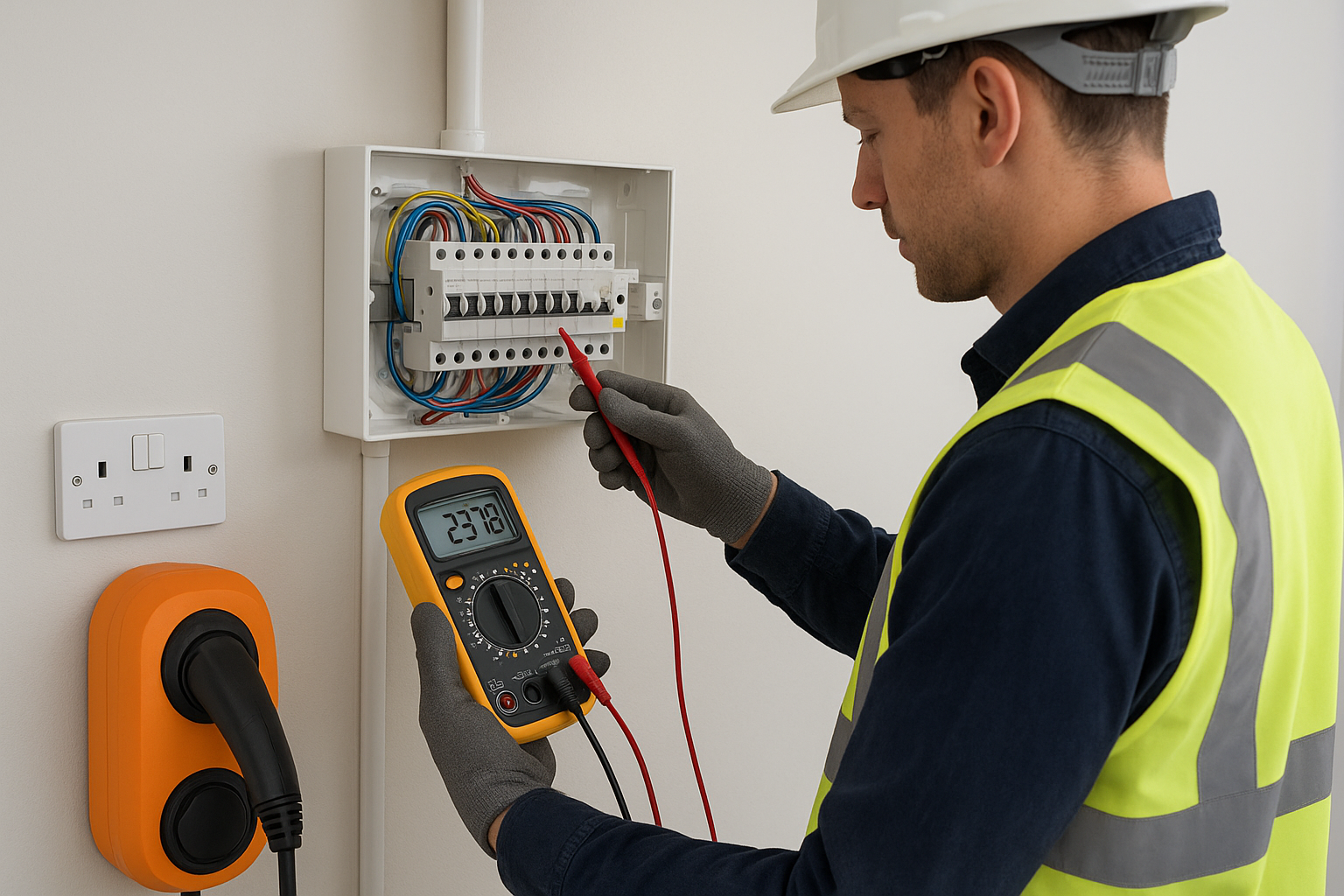
If you have exposed wiring, a burning smell, repeated tripping or a fault that keeps coming and going, the safest first step is to switch off the affected circuit at the consumer unit if you can do so safely, keep clear of damaged fittings and arrange a qualified electrician to inspect it. Juice wire electrics provides electrical fault finding in Twickenham for homes, flats, landlords and local businesses that need a careful, safety-first diagnosis rather than guesswork.
Faults in electrical systems are often hidden. A problem may be caused by a damaged cable, loose connection, damp, a failing light fitting, a socket issue, or a circuit that is simply overloaded. In Twickenham, that can mean anything from Victorian terraces and older rewires to converted flats, modern apartments, shops and offices near Twickenham Station, the River Thames, York House Gardens, Eel Pie Island and around Twickenham Stadium. The job is to trace the fault properly, isolate the circuit where needed, test the equipment and wiring, and explain the repair options clearly.
We work across Twickenham and nearby areas including St Margarets, Richmond, Teddington, Whitton and Isleworth. If you need tracing intermittent faults Twickenham, circuit testing and isolation Twickenham, earth fault and insulation testing Twickenham, hidden cable and junction box faults Twickenham, or written findings and repair options Twickenham, this service is designed to identify the cause and help you decide the next safe step.
Call 020 3519 9435 or email info@twickenham-electricians.co.uk to request a visit today. We are available 24 hours for urgent electrical issues.
Common warning signs include lights flickering without an obvious reason, sockets that stop working, breakers that trip again after being reset, a burning or fishy smell, scorch marks, buzzing from a switch or consumer unit, or an appliance that seems to trigger the same circuit fault. In some cases the problem appears only when a washing machine, kettle, heater or oven is used. In others it happens after rain, which can point to damp-related faults or water tracking into a junction box, external accessory or buried cable.
Electrical fault finding is not about replacing parts at random. It is about using the right inspection and testing sequence to narrow down the cause safely. That often starts with a visual check, then circuit isolation, then targeted testing to see whether the issue lies in the cable, the accessory, the connected equipment or the load on the circuit. Where the evidence points to a repair, we explain what needs attention and what can wait.
Tracing Intermittent Faults in Twickenham
Intermittent faults are some of the hardest electrical problems to diagnose because they do not always fail on demand. A circuit may work for hours, then trip when a certain appliance starts, or fail only when a switch is operated, a socket is loaded, or moisture gets into a fitting. In Twickenham properties, this can be especially common in older homes with mixed-age wiring, converted flats with shared routes, and premises where later alterations were added onto an older installation.
Our approach to tracing intermittent faults is to start with the symptoms you have noticed and then look for patterns. We ask when the fault occurs, which rooms or circuits are affected, whether there is any smell, heat, noise or visible damage, and whether it happens after rain, appliance use or switching lights on and off. That information helps narrow the search before testing begins.
Once on site, we use a structured fault-finding process to check the affected circuit and its connected equipment. That may include isolating sections of the installation, checking sockets, switches, light fittings and junctions, and looking for loose terminations or signs of overheating. If the fault only appears under load, we may need to observe how the circuit behaves when specific equipment is in use. In commercial settings, we also consider whether the issue is linked to operating hours, shared circuits or equipment start-up loads.
For homeowners and landlords, intermittent faults often show up in kitchens, utility rooms, loft spaces, garden circuits and older extensions. In flats, they can be linked to concealed wiring routes, upgraded lighting, or previous repairs where the original cause was not fully resolved. The aim is to locate the fault safely and avoid unnecessary disruption wherever possible.
If you are dealing with repeated tripping, a smell of burning, or a light that cuts out and returns, do not keep resetting the breaker in the hope that it will hold. Leave the circuit off if you can, keep people away from damaged wiring, and arrange inspection. A fault that comes and goes can still be serious.
Circuit Testing and Isolation in Twickenham
Circuit testing and isolation is a key part of safe electrical fault finding. Before any repair is considered, the affected circuit needs to be identified and, if necessary, isolated so that the fault can be investigated without exposing people or equipment to further risk. This is especially important where there are burning smells, exposed conductors, repeated trips or signs that a cable or accessory may be damaged.
In Twickenham homes and businesses, this process often begins at the consumer unit. We identify the circuit involved, confirm what it serves and check whether the problem is local to one part of the installation or affecting a wider area. If the fault is linked to a socket circuit, lighting circuit or appliance connection, we then narrow the search by checking the outlets, accessories and any visible junctions in that section.
Isolation is not just about turning something off. It is about making the work area safe while maintaining clear control over what is energised and what is not. That matters in larger homes, offices and shops, and in buildings where the wiring has been altered over time. In some older properties near Twickenham town centre and along routes towards Richmond and Teddington, there may be multiple additions, concealed runs or mixed wiring methods that make proper isolation essential.
Where appropriate, circuit testing can help distinguish between a fault in fixed wiring and a fault in connected equipment. That distinction matters because the repair may be very different. A faulty appliance, heater or fitting may need replacement or repair, while a wiring fault may require further investigation, cable repair or accessory replacement. If the evidence suggests a deeper issue, we explain the options before any work proceeds.
Customers should ask for current scheme registration and insurance details before electrical work is booked if those matters are important to them. What matters most on the day is that the circuit is treated safely, the fault is traced logically and the next step is explained clearly.
Earth Fault and Insulation Testing in Twickenham
Earth fault and insulation testing helps identify problems that are not always visible during a basic inspection. These tests are often useful where there are nuisance trips, unexplained disconnections, damp-related symptoms, or concerns about the condition of older wiring. They can also help when a circuit seems to fail intermittently but no obvious damaged accessory is found.
In practical terms, earth fault issues can occur when current is finding an unintended path to earth, often because of damaged insulation, moisture ingress, a faulty appliance, or compromised wiring. Insulation testing helps assess whether the cable insulation is still performing as it should. If insulation has deteriorated, the circuit may become unreliable or unsafe, particularly in older installations or where wiring has been disturbed by later alterations.
We see these concerns in a range of Twickenham properties, including Victorian terraces, converted flats, older rewires and modern flats where hidden wiring routes can make the fault less obvious. External circuits, garden lights, outbuildings and kitchen areas can also be affected by moisture or wear over time. In commercial premises, equipment, cleaning, condensation and heavy daily use can all contribute to fault conditions.
The purpose of testing is not to create unnecessary alarm, but to establish evidence. If the results show that a circuit is sound, that is useful information. If they show a defect, then the repair can be targeted rather than speculative. Where damp is involved, the electrical issue and the source of moisture may both need attention, because simply replacing a fitting without dealing with the cause may not solve the problem.
Some electrical work may be notifiable under Part P of the Building Regulations, depending on the scope and location of the work. Where certification is required, that should be handled properly as part of the job. If you are unsure whether the work falls into that category, ask before the repair starts.
Hidden Cable and Junction Box Faults in Twickenham
Hidden cable and junction box faults are common when the visible symptom is only the end result of a problem deeper in the installation. A light may flicker because of a loose joint above a ceiling, a socket may fail because of a damaged cable behind a wall, or a circuit may trip because a buried connection has deteriorated. These faults are often harder to locate in homes where alterations have been made over time, or where wiring runs are concealed in floors, ceilings, stud walls or service voids.
In Twickenham, this can affect older homes near the River Thames, converted properties close to the station, and mixed-use premises where wiring has been extended for new kitchens, offices or lighting layouts. It can also affect external cables, garage feeds and garden supplies, especially where buried cable damage has occurred through digging, movement or water ingress.
When hidden faults are suspected, the work needs a patient, methodical approach. We check accessible points first, then work back through the circuit to find the most likely area of failure. Junction boxes, ceiling roses, switch drops, socket chains and accessory terminations are all part of the investigation. If the fault is in a concealed location, we explain what has been found and what access may be needed to complete the repair safely.
For landlords and managing agents, this can be especially important because a hidden fault may affect more than one room or even more than one occupier if the wiring arrangement is shared. For businesses, a concealed fault can interrupt trading, affect lighting or trip essential equipment unexpectedly. The sooner the fault is found, the easier it is to control the disruption.
We do not recommend attempting to chase wiring or open hidden electrical enclosures without proper isolation and testing. If you can see exposed wiring, keep clear of it and switch off the affected circuit if it is safe to do so. Then arrange inspection.
Written Findings and Repair Options in Twickenham
After testing, you need clear information, not electrical jargon. Written findings and repair options help you understand what was tested, what was found and what can be done next. That is particularly useful for landlords, homeowners planning a repair, tenants reporting a fault, and businesses that need to decide whether to repair, isolate or plan further work.
Our written findings are based on the evidence found on site. Where possible, we explain the likely cause of the fault, the affected circuit or equipment, and any visible signs that support the diagnosis. If the issue is straightforward, the repair may be simple. If the fault is more complex, we will explain the next steps and whether further access, replacement parts or additional testing is likely to be needed.
Repair options can include replacing a damaged accessory, tightening or remaking a connection where appropriate, repairing a failed light fitting, dealing with a faulty socket, isolating a defective circuit, or advising on more extensive electrical repairs. In some cases, consumer unit work, lighting installation or socket installation may be part of the longer-term solution if the existing arrangement is no longer suitable or safe.
For domestic customers, clear advice is especially important when the fault affects a kitchen, bathroom, hallway or bedroom. For commercial customers, the priority may be restoring safe operation with the least disruption. In both cases, the goal is the same: make the system safe, identify the cause and explain the best route forward.
Juice wire electrics supports homeowners, landlords, tenants and local businesses across Twickenham with electrical fault finding, electrician call-outs, emergency electrician support, electrical repairs, consumer unit work, lighting installation, socket installation, domestic electrician services and commercial electrician support. Recent work has included a kitchen wiring inspection in Richmond after nuisance tripping, a replacement light fitting in Teddington with switch line checks, and an intermittent lighting fault repair in Whitton where switches and fittings were traced and restored to safe use.
If you are dealing with exposed wiring, a burning smell, repeated tripping or a fault that keeps returning, do not wait for it to worsen. Call 020 3519 9435 or email info@twickenham-electricians.co.uk and request a visit today. We cover Twickenham, St Margarets, Richmond, Teddington, Whitton and Isleworth, with local knowledge of the homes, flats, shops and offices around Twickenham Stadium, Twickenham Station, the River Thames, York House Gardens and Eel Pie Island.